What Is Digital Marketing?
Digital marketing is the use of internet-connected channels, platforms, tools, and data to connect businesses with their target customers. It covers everything from ranking your website on Google to running ads on Instagram, from automating your email sequences to generating leads through WhatsApp.
Digital marketing has evolved from a “nice to have” into a business necessity. With over 900 million internet users projected by the end of 2026, and smartphone penetration crossing 85% in urban India and over world, the question is no longer whether your business should be online. The question is how well your business shows up when a potential customer searches, scrolls, or asks an AI assistant for a recommendation.
For a Bengaluru-based SaaS startup, digital marketing might mean SEO-driven content and LinkedIn B2B ads. For a saree brand in Surat, it might mean Instagram reels and WhatsApp catalog automation. For a real estate developer in Mumbai, it might mean Google search ads and automated lead follow-up systems. The medium changes, but the core goal stays the same: attract the right people, convert them into customers, and retain them for the long run.
Why Digital Marketing Matters More Than Ever for Businesses in 2026
India’s digital economy crossed the $1 trillion mark in 2025 and continues to accelerate. Several macro shifts make digital marketing not just relevant but mission-critical for Indian businesses this year.
The AI Search Revolution Google’s AI Overviews now answer a significant portion of search queries directly on the results page. ChatGPT Search, Perplexity AI, and Gemini are giving users answers without clicking any website. If your business is not optimized to appear inside these AI-generated answers, you are losing visibility to competitors who are.
The Mobile-First Reality More than 78% of all digital purchases happen on mobile devices. Platforms like Meesho, Flipkart, and Myntra have built entire ecosystems around mobile-first commerce. Your website, ads, and content need to be designed for a thumb, not a mouse.
The Vernacular Surge By 2026, a large portion of internet users are consuming content primarily in regional languages: Hindi, Tamil, Telugu, Kannada, Marathi, Bengali, and more. Brands that invest in vernacular content marketing are seeing dramatically lower cost per acquisition in Tier 2 and Tier 3 cities.
The D2C Boom Direct-to-consumer brands like Mamaearth, boAt, Sugar Cosmetics, The Man Company, and WOW Skin Science have proven that consumers will buy directly from brands online if the experience is right. Digital marketing is the engine that powers D2C growth. A strong
brand development strategy is what separates D2C brands that scale from those that stall.
Post-Cookie Advertising Third-party cookies are now effectively dead across major browsers. First-party data, contextual targeting, and AI-powered audience modeling have replaced the old retargeting playbook. Businesses that built first-party data assets are now winning the
paid advertising game.
The Core Pillars of Digital Marketing in 2026
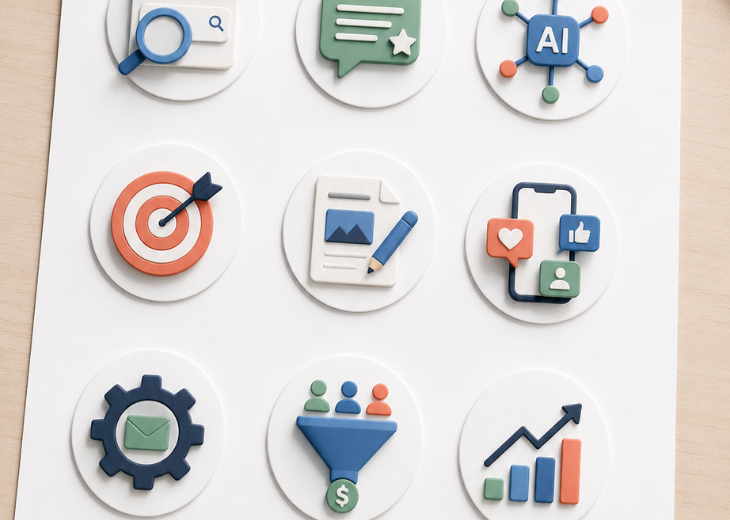
Modern digital marketing is not a single channel. It is an interconnected system of channels, each playing a specific role in the customer journey. Here are the pillars every business needs to understand.
If you want to see how all of these services come together under one roof, the
StepNGroow services page is a good place to start.
Search Engine Optimization (SEO): The Foundation of Online Visibility
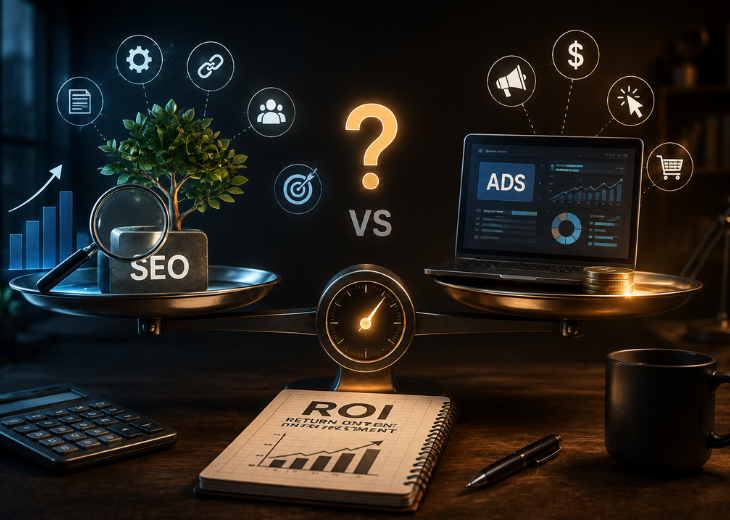
SEO remains one of the highest-ROI digital marketing activities for businesses in 2026. Unlike paid ads that stop the moment you stop spending, SEO compounds over time. A well-optimized page can generate traffic and leads for years.
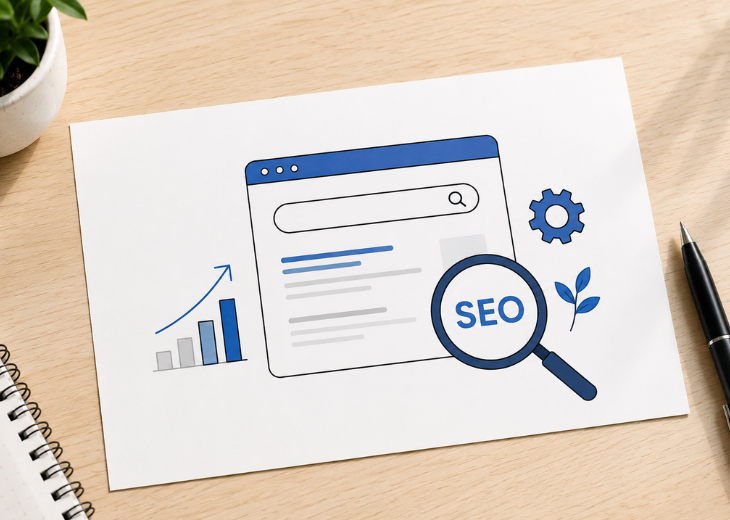
SEO is the practice of optimizing your website so it ranks higher in search engine results pages (SERPs) for queries your target customers are typing. In 2026, SEO has expanded far beyond keyword stuffing and link building. It now encompasses:
Technical SEO: Making sure your website is crawlable, fast, and mobile-friendly. Google’s Core Web Vitals (LCP, INP, CLS) are ranking signals. A website that loads in under 2.5 seconds on mobile has a measurable ranking advantage. This is also where website development quality directly impacts SEO performance, a poorly built site creates technical debt that holds back every other marketing effort.
On-Page SEO: Optimizing individual pages with the right keyword targeting, content depth, structured headers, and internal linking.
Off-Page SEO: Building authority through quality backlinks, brand mentions, and digital PR. Getting featured on platforms like Inc42, YourStory, Economic Times, and NDTV business sections carries real domain authority weight.
Local SEO: For businesses serving specific geographies, local SEO is critical. Optimizing your Google Business Profile, getting consistent NAP (Name, Address, Phone) citations, and earning local reviews can put you on the map for “near me” searches.
E-E-A-T: Google now heavily weighs Experience, Expertise, Authoritativeness, and Trustworthiness. This means your content needs real human expertise behind it, author credentials, original research, and trust signals like certifications, awards, and client testimonials.
How Businesses Are Winning with SEO
Consider how Nykaa, India’s leading beauty retailer, built a content moat through SEO. Their blog, NykaaNetwork, and product description strategy helped them rank for thousands of beauty-related keywords organically, reducing their dependency on paid acquisition. Similarly, PolicyBazaar built a dominant SEO presence in the insurance space by creating comprehensive comparison content that answered exactly what consumers were searching for.
A serious approach to SEO means working with a capable SEO agency that understands local search behavior, regional language optimization, and Google’s evolving algorithms. Businesses looking for affordable SEO services should be wary of “cheap SEO” providers who rely on outdated tactics like buying bulk backlinks or keyword stuffing. These approaches trigger Google penalties and can set your rankings back by months.
The cost of SEO in India varies widely. SEO packages typically range from Rs 15,000 per month for basic local SEO to Rs 2,00,000 or more per month for enterprise campaigns targeting highly competitive national keywords. The ROI, when done right, is among the highest of any marketing channel.
Key SEO Tactics That Work in 2026
Topic Cluster Architecture: Instead of random blog posts, build interconnected content clusters around core topics. A real estate company in Pune might build a cluster around “buy flat in Pune” with sub-pages covering specific localities, budget ranges, and project types.
Schema Markup: Structured data helps Google understand your content and display rich results (star ratings, FAQs, breadcrumbs, prices). It also helps AI systems like Google’s AI Overviews pull your information into their responses.
Core Web Vitals Optimization: Google measures LCP (Largest Contentful Paint), INP (Interaction to Next Paint), and CLS (Cumulative Layout Shift). Passing these thresholds is now table stakes for competitive rankings.
Video SEO: YouTube is the second-largest search engine in the world and is particularly popular. Optimizing YouTube videos with proper titles, descriptions, and transcripts creates a secondary organic channel.
Backlink Acquisition through Digital PR: Instead of buying links, earning them through newsworthy content, data studies, and media outreach. A Bengaluru fintech that published original data on UPI usage patterns earned natural backlinks from major news outlets.
Answer Engine Optimization (AEO) and Generative Engine Optimization (GEO): The New Frontier
This is the biggest shift in search marketing since mobile-first indexing, and most businesses have not yet caught up.
What Is Answer Engine Optimization (AEO)?
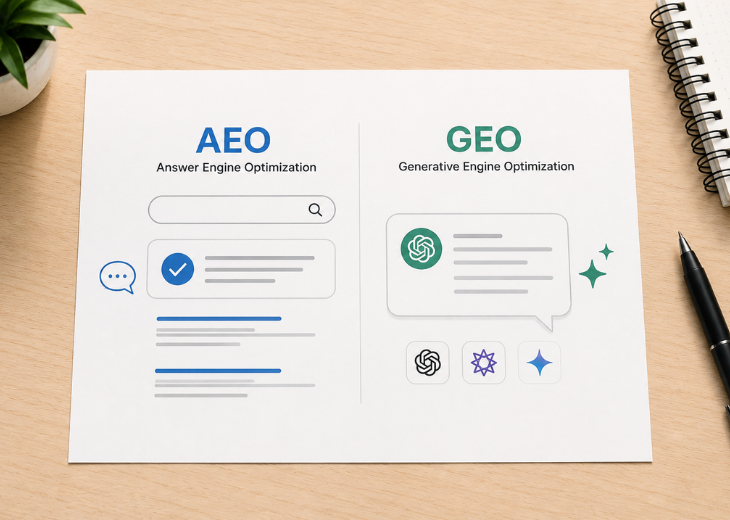
AEO is the practice of optimizing your content so it appears directly inside AI-generated answers, featured snippets, voice search results, and zero-click responses. When someone asks Alexa, Google Assistant, or Siri a question, the answer they hear comes from a specific web page. AEO is about making your page that source.
The difference between AEO vs SEO comes down to this: SEO gets you ranked on the results page. AEO gets your content read aloud or displayed as the direct answer. For branded queries, informational questions, and local searches, AEO can deliver visibility even when a user never clicks through to your website.
To optimize for featured snippets, you need to:
What Is Generative Engine Optimization (GEO)?
GEO goes one step further. It is the practice of optimizing your brand, content, and authority signals so that AI systems like ChatGPT, Perplexity, Google’s Gemini, and Microsoft Copilot cite your business when users ask relevant questions.
When someone types “best performance marketing agency” into ChatGPT Search, the results are not random. They are drawn from websites that AI models have assessed as authoritative, frequently cited, and trustworthy. If your website has weak content, few quality backlinks, and no structured data, AI models will ignore you in favor of competitors.
To rank on Google AI Overviews and appear in ChatGPT search results, businesses need to:
Build Genuine Topical Authority: Publish comprehensive, original content across every relevant topic in your industry. An SEO agency that wants to be cited by AI tools needs to have in-depth content covering technical SEO, local SEO, link building, content strategy, and more.
Earn High-Quality Citations: AI models treat backlinks and mentions from authoritative sources the same way Google does. Getting featured in Inc42, ET Brands Equity, Entrackr, and other respected business publications builds the citation profile that AI systems reward.
Use Clear, Factual, Citable Language: AI systems prefer content that makes specific, verifiable claims. “Our clients see an average 3.2x ROAS improvement within 90 days” is more citable than “we deliver great results.”
Maintain Consistent Brand Signals: Your business name, description, and expertise should be consistent across your website, Google Business Profile, LinkedIn, and any other platform AI systems index.
Structured Data and Schema: Properly marked-up content is significantly easier for AI systems to parse and cite. Organization schema, Article schema, FAQ schema, and BreadcrumbList schema all contribute to GEO performance.
For businesses, working with a generative engine optimization agency or a combined SEO AEO GEO agency India is now the smart move, because the AI search landscape is evolving monthly and requires specialists who track these changes in real time.
Performance Marketing: Where Every Rupee Is Accountable
Performance marketing is digital advertising where you pay for results: a click, a lead, a sale, an app install, or a specific action. Unlike traditional advertising where you pay for exposure, performance marketing is fully measurable.
India has one of the most competitive and cost-efficient performance marketing ecosystems in the world. A skilled performance marketing agency India can help businesses reach precisely targeted audiences at costs that would be impossible in Western markets.
What Makes Performance Marketing Different in 2026
The landscape has fundamentally changed since the third-party cookie deprecation. The best performance marketing agencies in India have shifted to:
First-Party Data Strategies: Collecting email addresses, phone numbers, and behavioral data directly from owned channels (website, WhatsApp, app) and using that data for targeting and lookalike audience creation.
AI-Powered Bidding: Google’s Performance Max campaigns, Meta’s Advantage+ Shopping, and LinkedIn’s AI-optimized delivery use machine learning to find the best-converting audiences automatically. The agencies that win are those who know how to feed these systems the right signals and creative.
Full Funnel Ad Strategy: Rather than just running bottom-funnel conversion ads, smart performance marketers build full-funnel ad strategies that run awareness content at the top, consideration content in the middle, and conversion-focused ads at the bottom. This approach dramatically lowers cost per lead compared to single-funnel strategies.
Creative as the New Targeting: With AI handling most of the bidding and audience optimization, the quality of your creative (copy, visuals, video) has become the primary differentiator. Brands like boAt and Zomato consistently invest in high-quality, culturally resonant creative that performs across all funnel stages. This is where investing in professional logo and graphic design pays measurable dividends in ad performance.
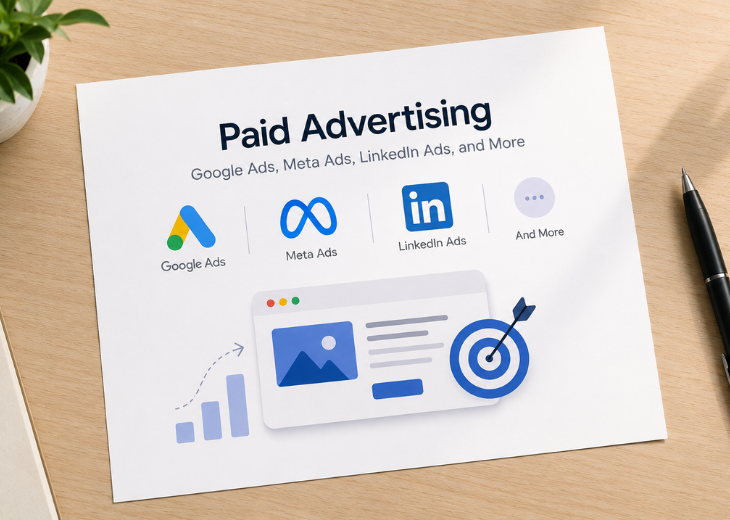
Paid Advertising: Google Ads, Meta Ads, LinkedIn Ads, and More
Paid advertising gives businesses immediate visibility and measurable results. Here is a breakdown of the major platforms and how they work in 2026.
Google Ads
Google Ads remains the most powerful paid advertising platform for businesses whose customers are actively searching for solutions. A plumbing company in Hyderabad, a CA firm in Ahmedabad, or an FMCG brand launching a new product can all use Google Ads to appear at the top of search results when potential customers are actively looking.
Working with a qualified Google Ads agency India is important because Google’s ad platform is increasingly complex. Google Search Ads, Performance Max, Display Network, YouTube Ads, and Shopping Ads each require different strategies, creatives, and optimization approaches. StepNGroow’s
paid advertising service covers the full spectrum of Google campaign types businesses.
Key things to know about Google Ads in 2026:
Meta Ads (Facebook and Instagram)
Meta’s advertising platform, covering both Facebook and Instagram, is the leading platform for consumer-facing brands. A Facebook and Instagram ads agency can help brands run everything from brand awareness campaigns to lead generation forms to catalog-based retargeting.
In 2026, Meta’s Advantage+ Shopping Campaigns have dramatically improved ROAS for D2C ecommerce brands. Brands like Snitch (menswear), Plum (skincare), and Minimalist (active ingredients skincare) use Meta’s AI-powered campaign optimization to efficiently scale their customer acquisition.
What is working on Meta Ads right now:
LinkedIn Ads for B2B
For B2B companies targeting professionals, decision-makers, and enterprises, LinkedIn Ads is unmatched. A well-run LinkedIn ads agency India can help SaaS companies, IT services firms, consulting companies, and professional services providers reach CFOs, CEOs, HR heads, and procurement managers with precision.
LinkedIn’s B2B advertising is particularly effective for:
LinkedIn lead generation ads with pre-filled forms are especially powerful because they remove friction from the lead capture process. A user does not need to type anything: their LinkedIn profile data populates the form automatically.
Retargeting Ads
Retargeting is the practice of showing ads to users who have already visited your website, engaged with your content, or interacted with your business in some way. Retargeting ads for ecommerce consistently outperform prospecting campaigns in ROAS because you are reaching people who already know your brand.
In a cookie-free world, retargeting now relies on first-party pixel data, hashed email lists, and Meta’s Conversions API (CAPI) to maintain accuracy.
Content Marketing: Building Trust at Scale
Content marketing is the creation and distribution of valuable, relevant content to attract and retain a clearly defined audience. In 2026, content marketing has become the backbone of both SEO and brand building.
Businesses that invest in content marketing build assets that work 24/7. A well-written blog post explaining “how to choose the right health insurance plan” can generate organic traffic, build trust, and convert readers into leads for years after it was published.
A full service content marketing agency helps brands plan, create, distribute, and measure content across multiple formats: blog articles, videos, podcasts, infographics, case studies, white papers, and social media content. You can see real examples of how this plays out in practice on the
StepNGroow case studies page.
What separates good content from great content in 2026:
Original Research and Data: Content that includes original data (surveys, studies, proprietary insights) earns significantly more backlinks and AI citations than generic content that repeats what everyone else is saying. A content marketing agency that publishes an annual “State of Digital Marketing” report with original survey data creates an asset that publications, journalists, and AI tools will cite repeatedly.
First-Hand Experience: Google’s E-E-A-T guidelines reward content written by people with genuine experience in the topic. A personal finance blog written by a SEBI-registered advisor carries more authority than one written by an anonymous freelancer.
Content Depth Over Frequency: Publishing one genuinely comprehensive 3,000-word guide is more valuable than publishing five thin 500-word posts. Google and AI systems both reward thoroughness.
Multimedia Content: Embedding relevant videos, images, tables, and interactive elements increases dwell time and signals content quality to search engines.
For brands, content marketing also means thinking about regional language content. A Tamil Nadu-based brand that creates quality content in Tamil, or a Maharashtra-based brand that publishes in Marathi, taps into audiences with dramatically lower content competition and higher engagement rates.
Social Media Optimization and Marketing
Social media optimization (SMO) is the process of strengthening your brand’s presence across social platforms through organic content, community building, and algorithm-aligned publishing strategies.
The social media landscape in 2026 is dominated by:
A social media optimization company helps brands develop platform-specific strategies, content calendars, community management playbooks, and performance reporting frameworks. StepNGroow’s social media marketing service is built around exactly this kind of structured, strategy-first approach rather than posting for the sake of posting.
Brands like Amul, which built decades of brand recognition through traditional advertising, have successfully transitioned their witty topical commentary strategy onto Instagram and X. Their ability to react to current events with clever content within hours is a masterclass in social media agility.
Marketing Automation: Working Smarter, Not Harder
Marketing automation is the use of software to automate repetitive marketing tasks: sending emails, scoring leads, nurturing prospects through sequences, updating CRM records, and triggering actions based on user behavior.
In 2026, marketing automation services have matured significantly. Tools like HubSpot, Zoho CRM, ActiveCampaign, Freshsales, and Leadsquared are widely used by businesses across various scales. StepNGroow’s
automation service helps businesses configure and connect these tools into a single, coherent growth system.
Why businesses need marketing automation:
Business landscape is characterized by high lead volumes, long sales cycles (especially in B2B and real estate), and limited sales team bandwidth. A real estate developer receiving 500 leads per month from digital campaigns cannot manually follow up with each one. An automated lead follow-up system can send personalized SMS, WhatsApp, and email sequences immediately after a lead submits their inquiry, dramatically improving conversion rates.
Studies consistently show that leads contacted within 5 minutes of inquiry are exponentially more likely to convert than those contacted after an hour. Automation makes instant follow-up possible at scale.
Key marketing automation workflows for businesses:
Lead Nurturing Sequences: A series of emails or WhatsApp messages sent to prospects over several weeks, educating them about your product and moving them closer to purchase. An ed-tech company like BYJU’s or Unacademy uses nurturing sequences to convert free trial users into paid subscribers.
Behavior-Based Automations: Triggers based on what a user does (or does not do). If a prospect visits your pricing page three times without converting, that behavior can trigger a specific follow-up message or a task for a sales rep to call.
CRM Integration and Lead Management: Automatically routing leads to the right salesperson, updating deal stages based on prospect activity, and triggering follow-up tasks ensures nothing falls through the cracks.
Email Drip Campaigns: Automated email sequences sent over time, starting from the moment a user signs up, downloads a resource, or starts a free trial. Email automation services India include platforms like Mailchimp, SendinBlue, and Zoho Campaigns.
WhatsApp and CRM Automation for Marketing
WhatsApp is not just a messaging app. It is a business communication infrastructure. With over 500 million WhatsApp users, it is the most direct and high-engagement channel available to businesses.
WhatsApp marketing automation has become a mainstream strategy for brands of every size. Using the official WhatsApp Business API (through providers like Interakt, AiSensy, Wati, or Gupshup), businesses can:
A jewelry brand in Rajkot using WhatsApp CRM automation can send personalized messages to customers on Akshaya Tritiya, Dhanteras, and wedding anniversary reminders, converting the right message at the right time into repeat sales.
WhatsApp Lead Generation Automation is particularly powerful when combined with Meta Ads. A “Click to WhatsApp” ad routes a prospect from Instagram or Facebook directly into a WhatsApp conversation with your business. An AI-powered chatbot can then ask qualifying questions, share product details, and even book appointments, all without a human agent. This kind of end-to-end flow is exactly what StepNGroow’s chatbots and virtual assistants service is designed to build.
For businesses using Zoho CRM, the combination of Zoho CRM automation with WhatsApp automation creates a seamless system where every lead is captured, routed, nurtured, and tracked without manual data entry.
AI Chatbots and Conversational Lead Generation
AI-powered chatbots have evolved from frustrating FAQ bots into genuinely intelligent lead qualification and customer service agents. In 2026, an AI chatbot for business can handle:
Conversational AI for lead generation is particularly valuable for businesses with high inquiry volumes. An educational institution, a real estate developer, or an insurance company receiving hundreds of website inquiries daily can use AI voice agents and chatbots to handle the first layer of qualification, so human sales teams only speak with genuinely interested and qualified prospects.
Companies like Haptik (backed by Reliance Industries) and Yellow.ai have built sophisticated conversational AI platforms that are now used by major enterprises including Airtel, ICICI Bank, Bajaj Finserv, and Tata CLiQ.
An intelligent chatbot for sales that integrates with your CRM, WhatsApp, and email systems creates a fully automated customer journey from first touchpoint through to qualified opportunity, dramatically reducing the cost per qualified lead. If you are evaluating this for your business, StepNGroow’s chatbots and virtual assistants service page walks through the different deployment options available.
Full Funnel Digital Marketing: From Awareness to Conversion
Full funnel digital marketing is the practice of running coordinated campaigns across all stages of the customer journey, not just the bottom of the funnel.
Most businesses make the mistake of only running bottom-funnel ads (“Buy Now”, “Get a Quote”, “Book a Demo”). While these convert existing demand, they fail to create new demand among the far larger pool of potential customers who are not yet looking for your product.
A full funnel ad strategy agency builds campaigns at three levels:
Top of Funnel (Awareness): Reaching people who fit your ideal customer profile but are not yet aware of your brand or solution. This might be YouTube pre-roll ads, Instagram Reels, display advertising, or content marketing. The goal is not immediate conversion. It is building familiarity. A strong brand development foundation ensures that when prospects encounter your brand at the top of the funnel, the impression is coherent, professional, and memorable.
Middle of Funnel (Consideration): Re-engaging people who have shown initial interest. This could be someone who watched 50% of your YouTube ad, visited your website once, or interacted with one of your social posts. Remarketing ads, email sequences, and comparison content are effective at this stage..
Bottom of Funnel (Conversion): Converting people who are actively evaluating solutions. This is where Google Search Ads, retargeting campaigns with strong CTAs, and direct sales outreach come together. At this stage, the prospect knows you and needs a reason to choose you over competitors.
Brands like Swiggy and Zomato run masterful full-funnel campaigns. Their top-of-funnel storytelling builds emotional connections. Their mid-funnel personalized notifications re-engage lapsed users. Their bottom-funnel push notifications and discount offers drive immediate orders.
Industry-Specific Digital Marketing
Different industries require different digital marketing approaches. Here is how it works across major sectors.
Ecommerce Digital Marketing
Ccommerce market is one of the fastest-growing in the world. Platforms like Flipkart, Amazon, Meesho, and Myntra dominate, but there is enormous opportunity for D2C brands.
An ecommerce digital marketing agency handles the complete growth stack: Google Shopping campaigns, Meta Catalog ads, ecommerce SEO services India (optimizing product pages and category pages), email and WhatsApp retention marketing, and marketplace SEO for Amazon and Flipkart product listings.
Ecommerce performance marketing is particularly sophisticated in 2026. The best ecommerce marketing agency India will look at metrics beyond ROAS: customer lifetime value (LTV), payback period, new-to-brand purchase rate, and return rate by acquisition channel. StepNGroow’s work with ecommerce clients is documented on the case studies page.
Real Estate Digital Marketing
Real estate is one of the highest-spending categories digital marketing. A real estate digital marketing agency India runs campaigns that generate qualified buyer inquiries for residential projects, commercial properties, and rental listings.
The key channels for real estate digital marketing:
Real Estate Digital Marketing
B2B businesses have been slower to adopt digital marketing than consumer brands, but this is changing rapidly. B2B ecommerce marketing and SaaS marketing requires a fundamentally different approach: longer content, LinkedIn-heavy distribution, account-based marketing, and longer nurturing sequences.
A digital marketing agency for startups that specializes in B2B understands the need for thought leadership content, LinkedIn organic and paid strategies, SEO targeting informational and commercial keywords, and marketing automation that nurtures leads over weeks and months.
Healthcare and Education
Healthcare and edtech are two of most rapidly digitizing sectors. Apollo Hospitals, Practo, BYJU’s, Unacademy, and PhysicsWallah have all built massive digital marketing engines. For smaller players in these sectors, content marketing, local SEO, and WhatsApp automation provide the most efficient growth paths.
How to Choose the Right Digital Marketing Partner
The digital marketing landscape is crowded. There are thousands of agencies claiming to be the best marketing agency, the best SEO company, or the top advertising agency in India. Here is how to evaluate them honestly.
Look for Specialization, Not Generalization: A digital marketing services provider that claims to be brilliant at SEO, performance marketing, social media, content, automation, and influencer marketing simultaneously is probably mediocre at all of them. The best agencies either specialize in a channel or service type, or they have dedicated specialists for each area under one roof.
Ask for Case Studies with Actual Numbers: Any reputable agency should be able to share case studies showing specific results: “We helped X company reduce cost per lead from Rs 2,400 to Rs 780 within 6 months” or “We grew organic traffic by 340% in 12 months for a Bengaluru SaaS company.” Vague claims about “delivering results” are red flags. Look for documented outcomes like those on the StepNGroow case study page.
Check Their Own Digital Presence: How does the agency rank on Google? How is their own content quality? Do they appear in AI search results for relevant queries? An SEO company that cannot rank its own website is a cautionary tale.
Understand Pricing Realistically: Digital marketing is not a commodity. Affordable digital marketing services in india should not mean cheap, cut-corner work. The cheapest option almost always costs more in the long run through wasted ad spend, algorithm penalties, and missed opportunities. Evaluate value, not just price.
Look for Transparent Reporting: Good agencies provide clear, honest reports showing what is working and what is not. Beware of agencies that report vanity metrics (impressions, followers) without connecting them to business outcomes (leads, revenue).
Assess Cultural and Industry Fit: A digital marketing agency for ecommerce in India may not be the right fit for a B2B enterprise software company. Industry experience matters because it shortens the learning curve and means they understand your customer’s psychology.
If your business is ready to move forward, the StepNGroow contact page is the right place to start a conversation about which combination of services fits your current stage of growth.