Quick summary: Lead generation for local businesses works when five pieces run as one system: a fast, conversion-focused website, monthly local SEO, consistent helpful content, monthly measurement, and CRM automation from day one, with paid ads used as a booster rather than the foundation. Dental clinics, physiotherapy practices, law firms and spas that buy SEO, ads or social media as separate services usually get traffic without steady bookings, because each piece depends on the others to turn a search into a booked appointment.
If you run a dental clinic, a physiotherapy practice, a law firm or a spa in the US, you’ve heard every pitch in the book. “You need SEO.” “You need Google Ads.” “You need three reels a week.”
Each is sold as the answer. But will any of them, on its own, bring in consistent leads?
It won’t. After auditing local businesses at StepNgroow, I keep seeing the same pattern, which we also covered in why most marketing fails. The problem is rarely one bad channel. It’s that the channels were never connected.
Why Standalone Services Don't Fix Local Business Lead Generation
- SEO that sends traffic to a slow, confusing website wastes the traffic.
- Ads that land on a page with no clear call to action burn your budget.
- Content nobody can find builds nothing.
- A lead that arrives at 9 PM and gets a reply the next afternoon has already booked with your competitor.
The fix isn’t another vendor. It’s one connected marketing system where every piece supports the others. Here it is.
|
Step |
What it does |
Owned or rented |
When results show |
|---|---|---|---|
|
1. Website |
Turns visitors into calls and bookings |
Owned |
Right after launch |
|
2. Local SEO |
Gets you found in Maps, Search and AI answers |
Owned |
Usually 3 to 6 months |
|
3. Blog content |
Answers questions before people call |
Owned |
Builds over 6 to 12 months |
|
4. Measurement |
Shows what produces paying clients |
Owned |
Every month |
|
5. Automation |
Replies, follows up, reminds, requests reviews |
Owned |
From day one |
|
Paid ads |
Instant visibility |
Rented |
Same week, stops when spend stops |
Step 1: Make Your Website Your Best Front Desk
Your website is your 24/7 front desk. SEO, ads and social media all send people there, so if it fails, everything upstream fails with it.
BrightLocal’s Local Consumer Review Survey 2026 found that 54% of consumers visit a business’s website after reading positive reviews, up from 32% in 2019. Reviews start the decision. Your website closes it.
What does a lead-generating website need?
- Loads fast on mobile, where most patients and clients search
- Says who you are, what you do and where you are within 5 seconds
- Shows one clear call to action on every page: Call Now, Book an Appointment, or Get a Free Consultation
- Builds trust with real reviews, credentials, team photos and photos of your space
- Makes booking effortless, with short forms and no dead ends
Look at how Aspen Dental structures its homepage: a Schedule button, the phone number of your nearest office, same-day appointment messaging and star ratings on every location card. A three-chair practice can copy that structure without a national chain’s budget.
My take: Fix the website before you spend another dollar on traffic. Doubling traffic to a page that doesn’t convert only doubles your bill.
Step 2: Do Local SEO Every Month, Not Once
SEO is a habit, not a project. Google says its local results are mainly based on relevance, distance and prominence, and prominence is partly built from your reviews and the sites that link to you. Neither of those is ever “finished.”
Google Business Profile optimization and local SEO for small businesses, month by month
- Keep your Google Business Profile complete and active: hours, categories, photos and posts
- Collect reviews every week and reply to every one
- Target the searches people actually type: “dentist near me,” “physiotherapist for back pain in Austin,” “divorce lawyer in Dallas”
- Keep your business name, address and phone number identical everywhere online
- Fix technical issues as they appear
In the same BrightLocal 2026 survey, 31% of consumers said they’ll only use a business rated 4.5 stars or higher, up from 17% in 2025, and 74% only care about reviews from the last three months. A strong rating from 2023 no longer carries you.
Local search also isn’t only on Google anymore. BrightLocal found that use of ChatGPT and other AI tools for local recommendations jumped from 6% to 45% in one year. That’s why our SEO, AEO and GEO services treat AI visibility as part of local SEO, not a separate project.
Step 3: Publish Helpful Blog Content Consistently
Your future clients have questions long before they call you:
- “Is a root canal painful?”
- “How many physio sessions does a frozen shoulder need?”
- “What should I do after a car accident?”
- “Which massage is best for stress relief?”
Every one of these is an opportunity. Answer it clearly and honestly, and readers start trusting you before they’ve met you.
Do blogs still help local SEO when AI answers the question?
Yes, arguably more than before. At Google I/O 2026, Google said AI Mode had passed one billion monthly users, with queries more than doubling every quarter since launch. Those AI answers draw on pages that answer questions clearly and specifically.
A practice that publishes one honest, well-structured answer a week gives Google and AI assistants something to cite.
Step 4: Measure Every Single Month
What gets measured gets improved. Once a month, review:
- Website traffic and where it comes from
- Which pages and blog posts attract visitors
- Rankings for your most important local searches
- Calls, form submissions and bookings
- Which sources turn into paying clients, not just enquiries
Most owners skip number five, so they keep funding the channel with the most clicks instead of the one with the most patients.
What About Paid Ads? Treat Them as a Booster
If you have the budget, ads are a great accelerator. They put you in front of people this week while organic growth builds.
- Paid ads are rented visibility. Stop paying and the leads stop.
- Organic visibility is owned. Rankings, content and reviews keep working month after month.
Morgan & Morgan, the “For the People” injury firm whose billboards and TV spots are hard to miss across the US, shows what ad-led growth really takes: national-scale budgets that never switch off. We break down the math in SEO vs paid ads for small businesses.
Step 5: Add Marketing Automation for Local Businesses From Day One
This is the step most local businesses skip, and where they lose the most money. Generating a lead is half the job. The other half is answering fast, following up and never letting an enquiry slip.
How fast should you respond to a new lead?
Within minutes, not hours. Speed to lead decides who gets the booking, and expectations keep rising: BrightLocal’s 2026 data shows 19% of consumers now expect a same-day reply to a review, up from 6% a year earlier. Expectations after a booking request are higher still.
What a CRM with automation, like GoHighLevel, handles for you
- Every enquiry from your website, Google, Facebook or ads lands in one inbox
- An instant SMS or email reply goes out, even at midnight
- Missed calls trigger an automatic text back
- Appointment reminders reduce no-shows
- Follow-up sequences nurture people who didn’t book right away
- Review requests go out automatically after every visit
By the time your team picks up the phone, the lead is warm, informed and ready to book. One note for US practices: get clear consent before texting, and keep health details out of marketing messages. Our marketing automation service builds these workflows.
Quick Checklist: Is Your Lead Generation System Complete?
- My website loads fast on a phone and shows a booking button without scrolling
- My Google Business Profile was updated this month
- I got new reviews in the last 30 days and replied to all of them
- I know which source produced my last 10 paying clients
- Every new enquiry gets an automatic reply within a minute, day or night
The Bottom Line
Lead generation for local businesses isn’t rocket science. It’s a system:
Great website → Regular SEO → Consistent content → Monthly measurement → Automation from day one → Ads as a booster when budget allows
Stop buying disconnected services and hoping one works. Build the system once, run it consistently, and let it work for you every day.
Building the System With StepNgroow
At StepNgroow Pvt Ltd, this is the system we build for dental clinics, physio practices, law firms and spas across the US: website fixes, local SEO with an AEO and GEO layer, content, monthly reporting and automation, run as one plan instead of five separate invoices. You can see how we approach growth in our case studies. If you’re not sure which part of the system is missing in your business, send us a message and we’ll take an honest look.
How do local businesses get more leads?
Local businesses get more leads by running one connected system: a fast website with a clear booking button, monthly Google Business Profile and review work, helpful content that answers customer questions, monthly tracking of which sources produce paying clients, and automation that replies to every enquiry within minutes. Paid ads can speed this up but should not be the foundation.
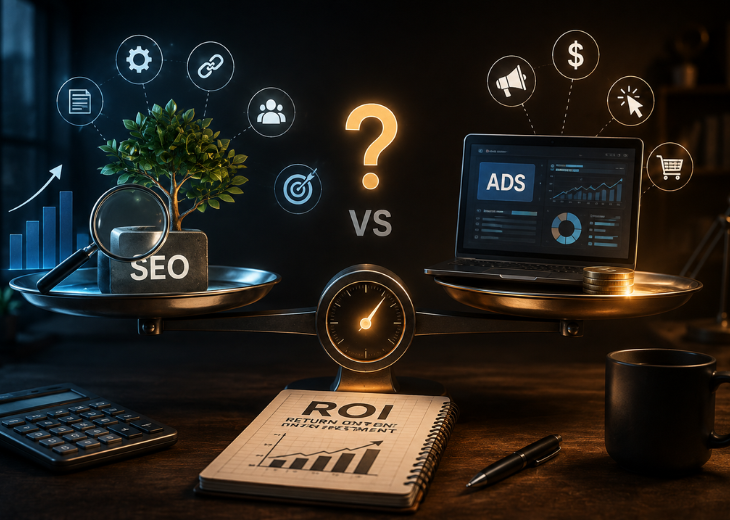
Is SEO or paid ads better for a local business?
Neither wins on its own. Paid ads bring visibility this week but stop the moment spending stops. Local SEO takes months to build, but the rankings, reviews and content keep producing leads without paying per click. Most local businesses should build SEO as the foundation and use ads as a booster when budget allows.
How long does local SEO take to work?
Most local businesses see meaningful movement in three to six months, depending on competition and how complete their Google Business Profile, reviews and website already are. Steady monthly work compounds, so results after twelve months are usually much stronger than after six. Quick fixes like profile completion and review replies can help sooner.
How quickly should a local business respond to a new lead?
Within minutes. The first business to reply usually gets the booking, and many enquiries arrive in the evening or on weekends when no one is at the front desk. An automated SMS or email reply, plus a missed-call text back, keeps the lead warm until your team can call.
What is the best CRM for a dental clinic, law firm or spa?
The best CRM is one that pulls every enquiry into one inbox, sends instant replies, texts back missed calls, sends appointment reminders and requests reviews automatically. GoHighLevel is a popular choice for local businesses because it combines these features. For healthcare practices, confirm the setup supports your privacy obligations before storing patient details.
Do I need a website if I already have a Google Business Profile?
Yes. Your profile gets you found, but many people check your website before they book, especially for higher-value services like dental implants, legal cases or therapy plans. A website with clear services, reviews, credentials and a simple booking path turns that interest into an appointment.