Quick summary: WhatsApp marketing means using WhatsApp Business tools (the free app or the paid Business API) to reach customers directly through chat, from answering questions in real time to running Click-to-WhatsApp ad campaigns. In the US specifically, Meta paused standard promotional template messages in April 2025, so most businesses now grow through Click-to-WhatsApp ads, service-window chats, and utility messages instead of mass broadcasts. This guide breaks down what actually works for American businesses in 2026, backed by real numbers and honest limitations, not recycled hype.
If you have opened WhatsApp on your phone in the last year and noticed a “Message us” button on an Instagram ad, you have already seen WhatsApp marketing in action. It is one of the fastest-growing customer engagement channels for small and mid-size businesses in the United States right now, and for good reason. WhatsApp messages get opened far more often than emails, and conversations feel personal instead of transactional. But before you jump in, there is a US-specific wrinkle almost nobody talks about, and I want to walk you through the whole picture honestly.
What Is WhatsApp Marketing, Exactly?
At its simplest, WhatsApp marketing is any business communication sent through WhatsApp instead of email, SMS, or a phone call. That could be a customer asking about store hours, a chatbot confirming an appointment, or an ad that opens straight into a chat window instead of a landing page. It sits on top of two products: the free WhatsApp Business app for solo operators and small teams, and the WhatsApp Business API (also called Cloud API) for companies that need automation, multiple agents, and CRM integration.
The appeal is simple. Open rates on WhatsApp regularly land in the 95 to 98 percent range, compared to the 20 to 25 percent most email marketers settle for. That gap alone explains why so many US brands are experimenting with the channel this year.
Why WhatsApp Marketing Works So Well Right Now
WhatsApp has quietly become a real US platform, not just an international one. Sensor Tower data shows around 124 million monthly active WhatsApp users in the US in 2026, and adoption skews heavily toward younger adults and Hispanic American communities, which matters a lot if your customer base includes either group. Combine that reach with a messaging format people already check dozens of times a day, and you get a channel that consistently outperforms cold outreach.
Is WhatsApp Marketing Legal for US Businesses in 2026?
Yes, but here is the part most beginner guides skip entirely. Meta paused standard marketing-category template messages to US phone numbers on April 1, 2025, a policy shift that automation platforms like ManyChat flagged to their customers at the time. If you try to send a bulk promotional broadcast to a US number using an old-style marketing template, it simply gets rejected. This is a Meta platform rule, not a US law, and as of mid-2026 it is still in effect with no announced end date.
That sounds discouraging, but it is not the dead end it seems. Three things still work perfectly well for US businesses:
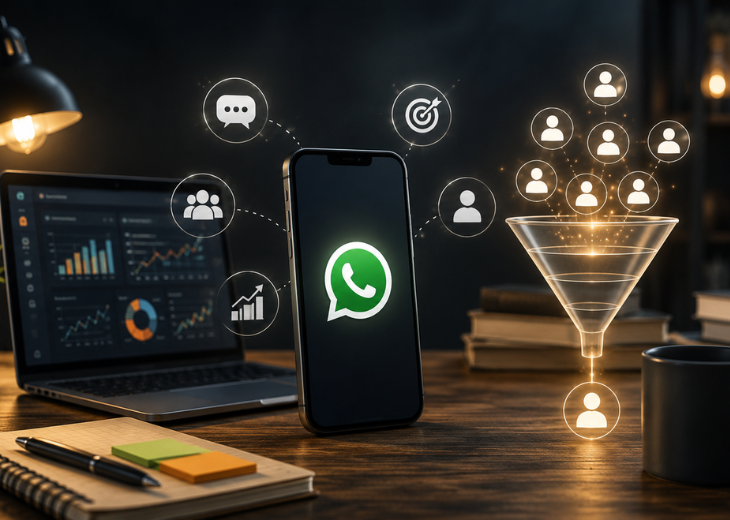
- Click-to-WhatsApp Ads (CTWA): Facebook and Instagram ads that open a WhatsApp chat instead of a landing page. Once someone taps the ad and messages you, a free 72-hour conversation window opens where you can talk, recommend products, and close sales without restriction.
- Utility messages: Order confirmations, shipping updates, appointment reminders. These are unrestricted and cheap, though they cannot carry promotional content.
- The 24-hour service window: Any time a customer messages your business first, whether from a QR code, your website, or a reply to a utility message, you get a full day of free, unrestricted conversation.
Put those three together and you have a real marketing engine, just built differently than in markets like India or Brazil where full promotional broadcasts still work. I would honestly rather see a US business build genuine two-way conversations through this model than chase mass broadcasts that would not have been effective anyway.
Real-World Examples Worth Studying
You do not need a Fortune 500 budget to see WhatsApp marketing pay off. Industry data on Click-to-WhatsApp campaigns has shown a mid-size online store recovering over $18,000 in abandoned carts in a single month after adding automated WhatsApp recovery flows, a roughly 12x return against the platform’s monthly cost. That is the kind of case study I find genuinely useful, because it is a scale most small and mid-size US businesses can actually relate to, not a headline number from a billion-dollar brand.
Global companies that most Americans already recognize, including large fast-food and retail chains, have folded WhatsApp into their CRM systems for order updates and loyalty communication, proving the channel scales just as well for enterprise support as it does for a single-location business.
Closer to home, the businesses seeing the strongest results in 2026 tend to be local service providers: dental clinics confirming appointments, real estate agents sharing new listings the moment they hit the market, HVAC companies sending technician arrival windows. None of that needs a marketing template. It all runs through utility messages and service-window chats, which is exactly what the current US rules allow.
How to Start WhatsApp Marketing for Your Business
- Set up and optimize your WhatsApp Business profile. This is the free starting point, and it matters more than people assume. A complete profile with your business category, hours, catalog, and a clear description builds trust before a single message is sent, and it is the foundation every paid campaign sits on top of.
- Get verified and move to the API when you outgrow the app. Once you need automation, multiple agents, or CRM syncing, the Business API is the natural next step.
- Launch a Click-to-WhatsApp Ads campaign. Start small, target a warm audience, and write a first message that sounds like a person, not a script.
- Build service-window automation. A simple chatbot that answers FAQs, checks appointment slots, or shares pricing keeps the free 24-hour window open and useful.
- Connect WhatsApp to your CRM. This is where marketing automation platforms, GoHighLevel among them, earn their keep. A CRM that can trigger a WhatsApp utility message the moment a lead books a call, or route an inbound WhatsApp reply straight into a sales pipeline, turns scattered conversations into a system you can actually measure. If workflow automation and pipeline tracking are new territory for you, that is exactly the kind of setup our marketing automation services are built to handle.
WhatsApp Marketing Software to Consider
There is no shortage of WhatsApp marketing software on the market, from lightweight chatbot builders to full CRM suites with WhatsApp built in. The right choice depends on your team size and how much of the customer journey you want automated end to end. Smaller US businesses often start with a simple API connector for confirmations and support, then graduate to a unified platform once WhatsApp becomes a primary revenue channel rather than a side project.
WhatsApp Marketing vs SMS and Email
WhatsApp is not a replacement for SMS or email marketing in the US, it is a complement. SMS still has broader reach across older demographics and works well for time-sensitive alerts. Email remains the cheapest channel for long-form content and newsletters. WhatsApp wins on engagement and conversation quality, especially for younger, urban, and Hispanic American audiences where adoption runs highest. My honest take: the businesses that win in 2026 are running all three together, not picking one and abandoning the rest.
Common Mistakes Beginners Make
The biggest mistake I see is businesses treating WhatsApp like a second email list and trying to blast marketing templates to US numbers, which now simply fail. The second is ignoring profile optimization, since an incomplete business profile quietly kills trust before a conversation even starts. The third is letting the free 24-hour service window close without a reason for the customer to reply, which resets the clock on free, unrestricted messaging.
Getting It Right From the Start
WhatsApp marketing in the US in 2026 rewards businesses that build real conversations rather than chase old-school broadcast tactics that Meta has already restricted. Start with a strong profile, add Click-to-WhatsApp ads for acquisition, lean on the service window for nurture, and connect it all to your CRM so nothing falls through the cracks. If you want a second set of eyes on how WhatsApp fits into your broader growth strategy, our team at StepNgroow Pvt Ltd spends every day helping US and global brands turn scattered channels like this into one connected system, and you can see how we approach that kind of integrated growth on our homepage, or reach out through our contact page if you would rather just talk it through.
What is WhatsApp marketing?
WhatsApp marketing is the practice of using the WhatsApp Business app or Business API to communicate with customers, from answering questions and confirming orders to running Click-to-WhatsApp ad campaigns that open directly into a chat.
Is WhatsApp marketing legal for US businesses in 2026?
Yes. It is legal, but Meta paused standard promotional template messages to US phone numbers starting April 1, 2025. US businesses now rely on Click-to-WhatsApp Ads, utility messages, and the 24-hour service window instead of mass marketing broadcasts.
How do I start WhatsApp marketing for my business?
Set up a complete WhatsApp Business profile, move to the Business API once you need automation, launch a small Click-to-WhatsApp Ads campaign, and connect WhatsApp to your CRM so conversations feed into a real sales pipeline.
What is the difference between WhatsApp marketing and SMS marketing?
WhatsApp typically sees higher open and engagement rates and supports richer media and automation, while SMS reaches a broader demographic and works well for simple, time-sensitive alerts. Most US businesses use both.
What software do I need for WhatsApp marketing?
It depends on scale. Solo businesses can start with the free WhatsApp Business app. Growing businesses typically add a Business API connector or a full CRM platform with WhatsApp integration to automate replies, confirmations, and lead routing.